Musical chairs isn’t just a game for kids; it’s a hilarious, adrenaline-pumping experience that can bring out the inner child in anyone, regardless of age. Picture a room full of adults, laughter echoing as they scramble for that elusive seat. It’s a delightful chaos that combines nostalgia with a dash of competitive spirit. Who knew that a simple game could transform a gathering into a riot of fun?
Overview of Musical Chairs
Musical chairs offers a simple yet engaging experience that appeals to various age groups. The game involves arranging chairs in a circle, with one fewer chair than the number of players. As music plays, participants walk around the chairs, and when the music stops, everyone rushes to find a seat.
Players compete strategically, often leading to humorous moments as participants scoot for a seat. Game dynamics change depending on the age group. For children, the emphasis lies in fun and playful interactions. Adults may focus more on competition, adding an exciting twist to the event.
This activity serves as an icebreaker, enhancing social connections at gatherings. Organizers can adapt the rules to suit the participants. For instance, introducing themed music and creative chair designs can elevate the experience. Everyone enjoys a surprise element, which keeps players engaged throughout.
A practical setup requires minimal resources. Chairs can be borrowed, and music can be easily played from a phone or speaker. Timing also plays a crucial role, dictating how long the music lasts or when to start the game.
The versatility of musical chairs makes it a timeless choice for any celebration or event. Those looking to foster camaraderie or simply create memorable moments will find musical chairs a perfect fit. Adaptations for larger groups or specific themes cater to various interests, ensuring a delightful experience for all.
History of Musical Chairs
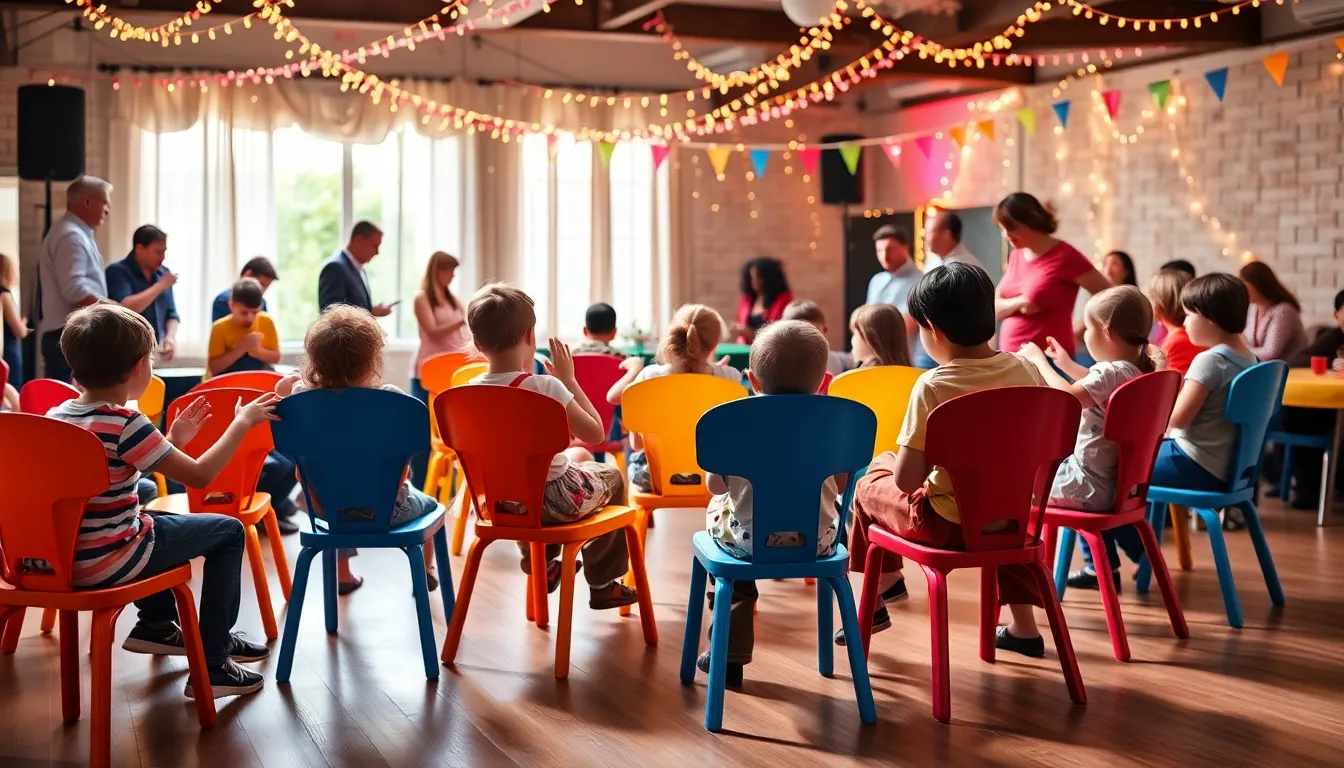
Musical chairs has an intriguing history that highlights its enduring popularity across generations. It traces its origins to a Victorian-era game called “The Game of Chairs.”
Origin of the Game
The Game of Chairs emerged in England during the 19th century. Players arranged chairs in a circle, much like today, and competed to sit as music played. The concept quickly spread across Europe, gaining traction at social gatherings and festive occasions. Initially, it served as a form of entertainment for adults, blending competition with camaraderie. Despite these roots, over time, it also captured the imagination of children, evolving into a beloved pastime at birthdays and school events.
Evolution Over Time
Musical chairs transformed significantly throughout the decades. By the early 20th century, variations arose that included different music styles and game rules. Popular cultures embraced the game, featuring it in films and television shows, enhancing its visibility. Today, the game appears in diverse settings, from casual family gatherings to elaborate parties. Innovations like themed versions, unique chair designs, and energetic music playlists continue to invigorate the experience. The game’s ability to adapt ensures its status as a timeless classic for people of all ages.
Benefits of Musical Chairs for All Ages
Musical chairs offers numerous advantages that enhance the experience for participants across different age groups. Engaging in this lively game promotes both physical and social benefits, contributing to overall well-being.
Physical Benefits
Musical chairs encourages movement, stimulating physical activity. Participants engage in walking, running, and quick reflexes, improving coordination and balance. Increased heart rate during gameplay provides a cardiovascular workout, benefiting overall health. Regular play promotes stamina and can help in maintaining a healthy weight. Players of all ages, including seniors, can enjoy adaptations to accommodate varying mobility levels. Inviting music enhances motivation, making physical exertion feel more enjoyable.
Social Benefits
This game fosters social interaction and enhances relationships. Participants bond over shared laughter, igniting camaraderie and teamwork. It serves as an effective icebreaker, easing tensions in new or diverse groups. By competing together, players develop vital communication skills while learning to handle wins and losses gracefully. Musical chairs creates memorable experiences, making it ideal for events and gatherings. Connections formed during gameplay transcend age barriers, encouraging inclusivity and engagement.
How to Adapt Musical Chairs for Different Age Groups
Adapting musical chairs for various age groups creates a more enjoyable experience for participants. Each age group benefits from tailored modifications that enhance gameplay.
Variations for Children
Children thrive on creativity during musical chairs. Using colorful chairs adds visual appeal and excitement. Incorporating fun themes, like favorite cartoons or animals, increases engagement. Shorter rounds keep their attention, ensuring everyone enjoys the game. Adding playful music, such as upbeat pop songs, encourages energetic movements. Setting specific rules, like elimination after two rounds, balances competitiveness with fun. These variations foster social skills, teamwork, and laughter among young players.
Modifications for Adults
Adults may appreciate a more competitive twist to musical chairs. Introducing themed playlists can elevate the experience, creating a lively atmosphere. Incorporating physical challenges, such as jumping or dancing around chairs, adds excitement to the game. Instead of traditional elimination, fostering teamwork by forming pairs or small groups encourages collaboration and strategy. Using comfortable seating options ensures participants can focus on the fun rather than discomfort. Strategies like creating a tournament format or offering small prizes for winners heighten engagement and interaction.
Inclusive Options for Seniors
Seniors enjoy musical chairs’ social aspect, so modifications enhance their comfort. Using stable chairs with armrests provides safety and ease of movement. Slower-paced, familiar music fosters enjoyable participation, allowing them to engage without pressure. Implementing softer rules, such as allowing extra chairs for everyone, encourages inclusivity. Designating a designated movement area rather than rapid chair races helps maintain a relaxed environment. Incorporating seated activities, like trivia or storytelling, during breaks ensures all participants stay involved and connected.
Tips for Organizing a Successful Game
Organizing a successful game of musical chairs involves careful planning and attention to detail. Effective execution enhances the fun for all ages.
Setting Up the Game Area
Designate a spacious area for the game, allowing players to navigate comfortably around the chairs. Arrange chairs in a circle, ensuring they’re stable and well-spaced for easy access during play. Include enough seating, where the number of chairs is one less than the number of players, promoting excitement. Clear any obstacles to create a safe environment, minimizing the risk of trips or falls. Consider adding decorations to enhance the atmosphere and theme of the event, making it more inviting for participants.
Choosing the Right Music
Selecting appropriate music is crucial for a lively game. Pick upbeat, engaging songs that appeal to all age groups, ensuring that the tempo matches the energy of the gathering. Use a playlist featuring a variety of genres, incorporating popular favorites or nostalgic tunes that resonate with participants. Adjust the volume to maintain an enjoyable atmosphere while allowing players to hear music cues. Consider mixing in theme-specific songs or tracks related to events, which can create a fun and immersive experience for everyone involved.
Conclusion
Musical chairs stands out as a dynamic game that transcends age barriers and brings people together. Its ability to foster laughter and excitement makes it a perfect addition to any gathering. With simple rules and endless adaptability, it ensures that everyone can join in on the fun.
The game not only promotes physical activity but also strengthens social bonds, creating lasting memories. Whether it’s a children’s birthday party or a family reunion, musical chairs can elevate the atmosphere and engage participants of all ages. By embracing this classic game, hosts can ensure their events are lively and unforgettable.