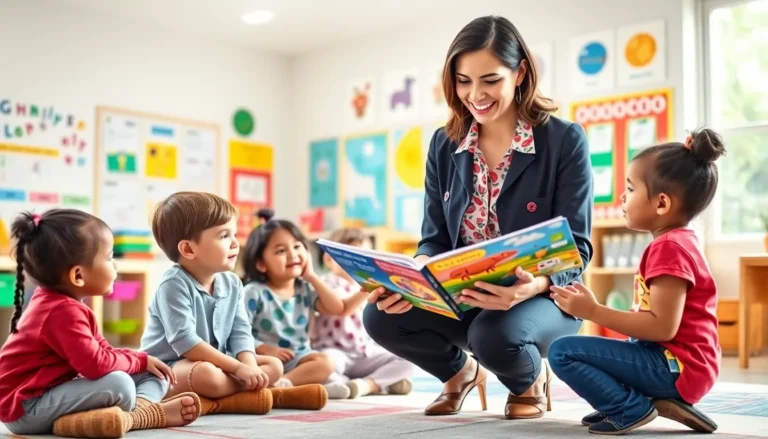
Ever wondered why kids seem to learn better when they’re playing with blocks than sitting in a classroom? That magic happens in early childhood education. A bachelor’s degree in this field equips educators with the tools to make learning fun and impactful. Let’s jump into what this degree really covers, why it’s essential, and how it can pave the way for a rewarding career while keeping your sanity intact.
What Is Bachelor Early Childhood Education?

A Bachelor in Early Childhood Education (ECE) is an academic program specially designed to prepare individuals for teaching young children, typically from birth to age eight. This degree encompasses a variety of crucial subjects aimed at fostering the developmental needs of children during pivotal early years. These formative experiences are not just about teaching letters and numbers: they also focus on social, emotional, and physical development. The curriculum integrates theory and practice, enabling future educators to understand child psychology, pedagogy, and effective instructional methods.
Also, these programs often incorporate hands-on experiences, allowing students to apply classroom knowledge in real-world settings. In short, a bachelor’s degree in early childhood education is an essential stepping stone for anyone looking to make a lasting difference in children’s lives while shaping future generations.
Key Components of the Curriculum
The curriculum for a Bachelor’s in Early Childhood Education covers a wide array of subjects, think of it as a smorgasbord of knowledge essential for budding educators. Here are some of the key components:
Child Development
Understanding how children grow and learn is foundational. This part of the curriculum focuses on cognitive, emotional, social, and physical development.
Curriculum Planning
Creating engaging and developmentally appropriate lesson plans is crucial for keeping young minds interested and excited. Future educators learn how to design activities aligned with educational standards.
Assessment Strategies
Learning how to assess a child’s development and understanding what their unique needs are is imperative. This ensures tailored educational experiences.
Family and Community Engagement
This essential component teaches educators the importance of involving families and communities in the educational process, fostering a supportive environment for children.
Advocacy and Ethics
Future educators are trained to become advocates for children and families, ensuring that the rights and needs of all children are represented and upheld.
Through these components, students develop a comprehensive understanding of how to create a nurturing environment that promotes lifelong learning.
Career Opportunities with a Bachelor’s Degree in Early Childhood Education
A bachelor’s degree in early childhood education opens numerous career opportunities. Here are a few popular paths:
Preschool Teacher
This role involves teaching children aged 3-5 in a play-based environment, focusing on foundational skills through exploration and creativity.
Kindergarten Teacher
Working with children aged 5-6, kindergarten teachers play a vital role in preparing them for elementary school, usually focusing on literacy, math, and social skills.
Special Education Teacher
Specializing in working with children who have unique learning needs, these educators create tailored learning experiences and may collaborate with specialists.
Child Care Center Director
For those who prefer administrative roles, directing a childcare center involves overseeing the operation, staff, and curriculum development.
Family Support Specialist
In this position, educators work with families to help them navigate childcare options and educational resources, ensuring kids have strong support systems.
Each of these opportunities not only provides a chance to impact children’s lives but also offers the potential for professional growth in a highly rewarding field.
The Importance of Accreditation and Licensing
When pursuing a bachelor’s degree in early childhood education, understanding accreditation and licensing is key. Accreditation ensures that the program meets the essential quality standards set by educational authorities. Graduating from an accredited program is often a prerequisite for obtaining your license.
Licensing requirements vary by state but generally include passing exams and gaining hands-on experience through internships or student teaching. This validation provides an assurance to parents and institutions that educators are well-equipped to handle the demands of teaching young children. Without proper accreditation and licensing, future educators may find it challenging to secure positions in reputable institutions.
Skills Needed for Success in Early Childhood Education
Success in early childhood education requires a unique set of skills beyond mere content knowledge. Here are key abilities that standout educators often possess:
Patience
Teaching young children can feel like herding cats. Patience is essential for guiding them through their learning paths.
Creativity
Innovative lesson planning keeps learning exciting. The ability to think outside the box ensures children engage actively in their education.
Communication Skills
Young children may not articulate their needs clearly. Proficient communication helps educators connect with both kids and parents effectively.
Emotional Intelligence
Understanding the emotional needs of children is crucial. Educators with high emotional intelligence can better support children’s social and emotional development.
Problem-Solving Skills
In a classroom full of energetic kids, challenges arise regularly. Quick thinking and effective problem-solving can make all the difference.
Challenges and Rewards of the Profession
Working in early childhood education comes with its challenges and rewards. Here’s a brief overview:
Challenges
- Emotional Strain: Educators often feel an emotional investment in their students’ lives, which can be overwhelming at times.
- Resource Limitations: Many institutions face funding issues, making it hard to provide adequate resources.
- High Expectations: Balancing educational standards with children’s individual needs can create pressure.
Rewards
- Impactful Work: Making a positive impact on children’s lives is extremely fulfilling.
- Lifelong Learning: The field continuously evolves, offering educators numerous learning opportunities.
- Community Engagement: Building relationships with families and communities strengthens the support network for children.
Though the road may not always be smooth, the rewards often outweigh the challenges, leading to a gratifying career.